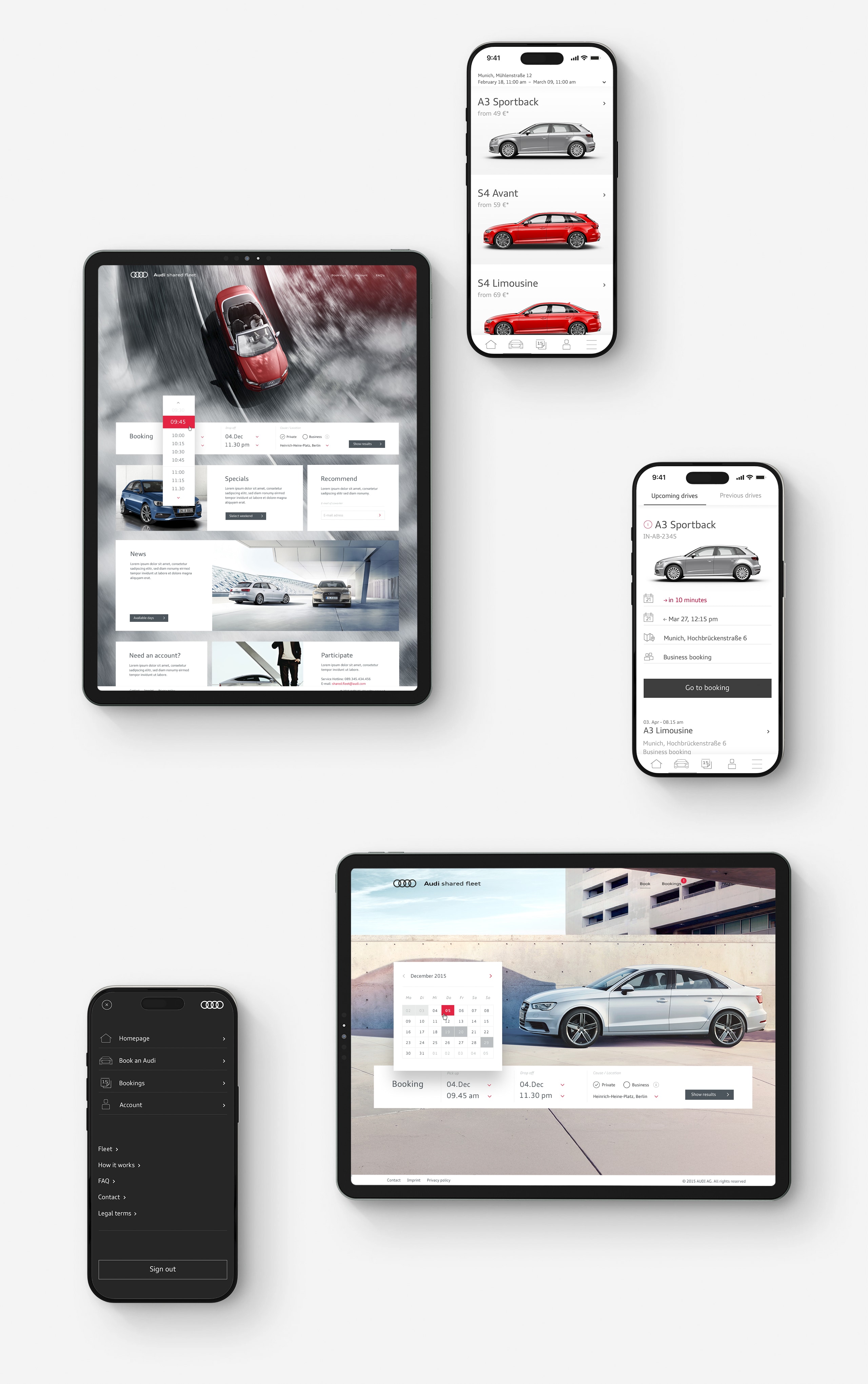
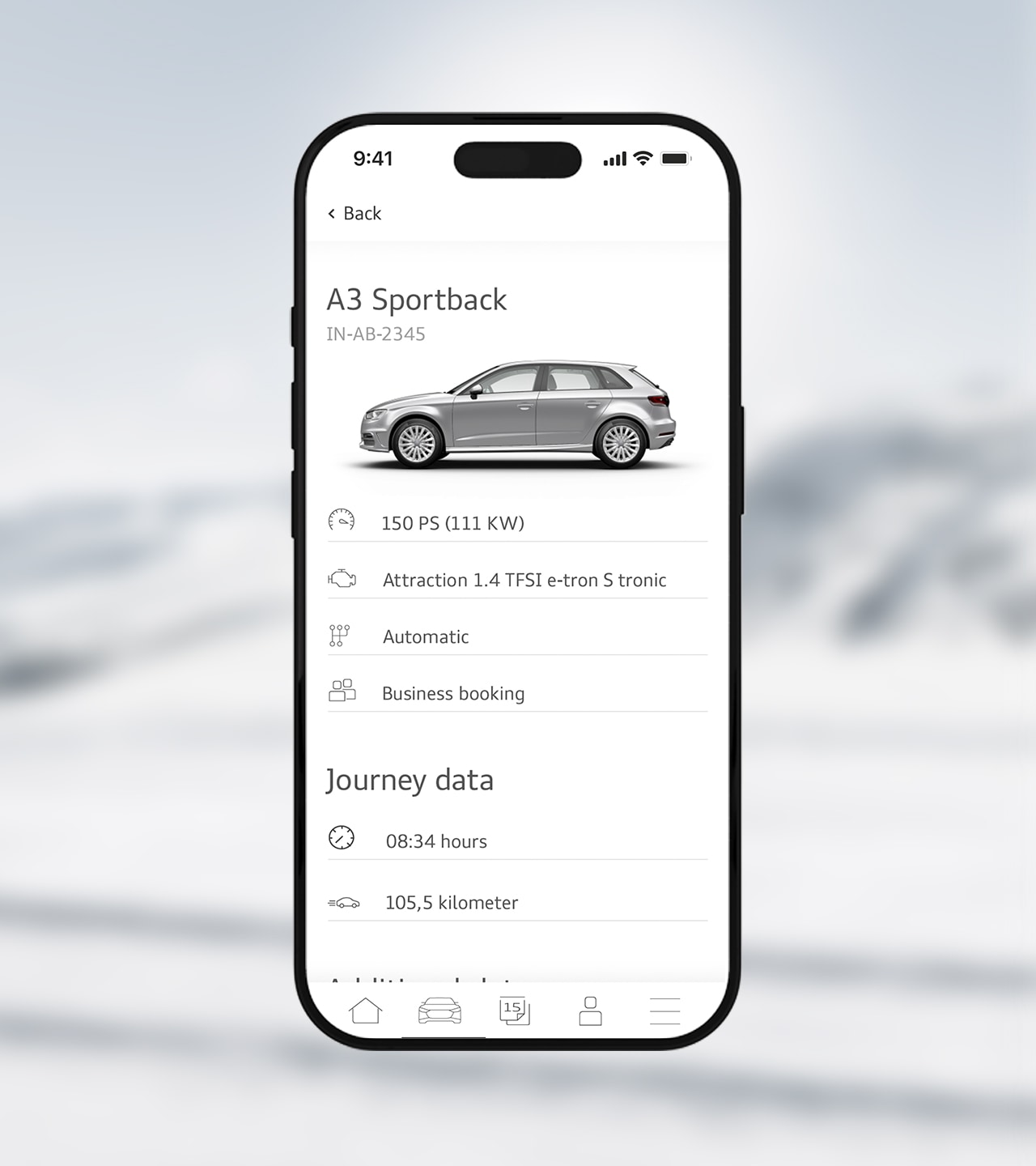
Fleet vehicles are a significant commitment for the companies that operate them. During business hours they move. Outside those hours they stand. Audi Business Innovation had a service answer to that idle time: fleet customers offering their vehicles to employees for private use, on demand and at rates that made the offer genuinely attractive. Early beta services were already running in Berlin. Our task was to develop the product that would carry the wider rollout. TFO took the experience to market readiness for a Benelux pilot, the whole journey end to end, from surveys and analytics through interface design to the integrations that connected the service with broader mobile platforms.
Summary: A vehicle spends most of its life standing still. Eighty percent parked, a fraction of the time in motion. That imbalance was Audi's starting point for rethinking fleet management as a service rather than a cost. We came in to give it a product.
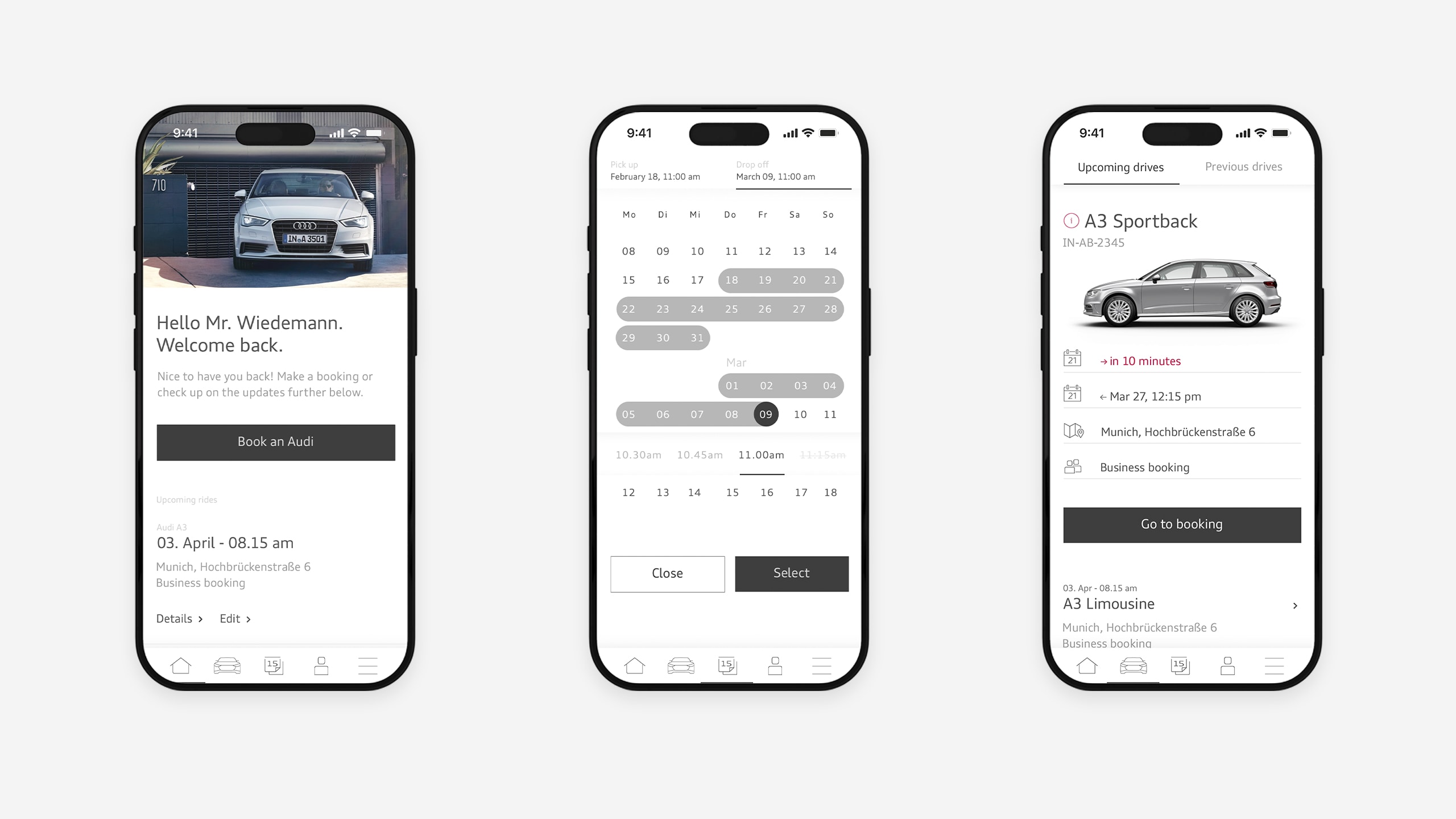
The proposition carried incentive for everyone. Companies could offer their employees access to vehicles they already owned at marginal additional cost, as a benefit or a recruiting advantage. Employees gained on demand mobility at rates well below private alternatives. Audi extended its relationship with fleet customers into a service layer beyond the vehicle itself, while fleet utilisation rose and downtime fell. The product carried that logic across two modes of use, in a native app and a browser based service.
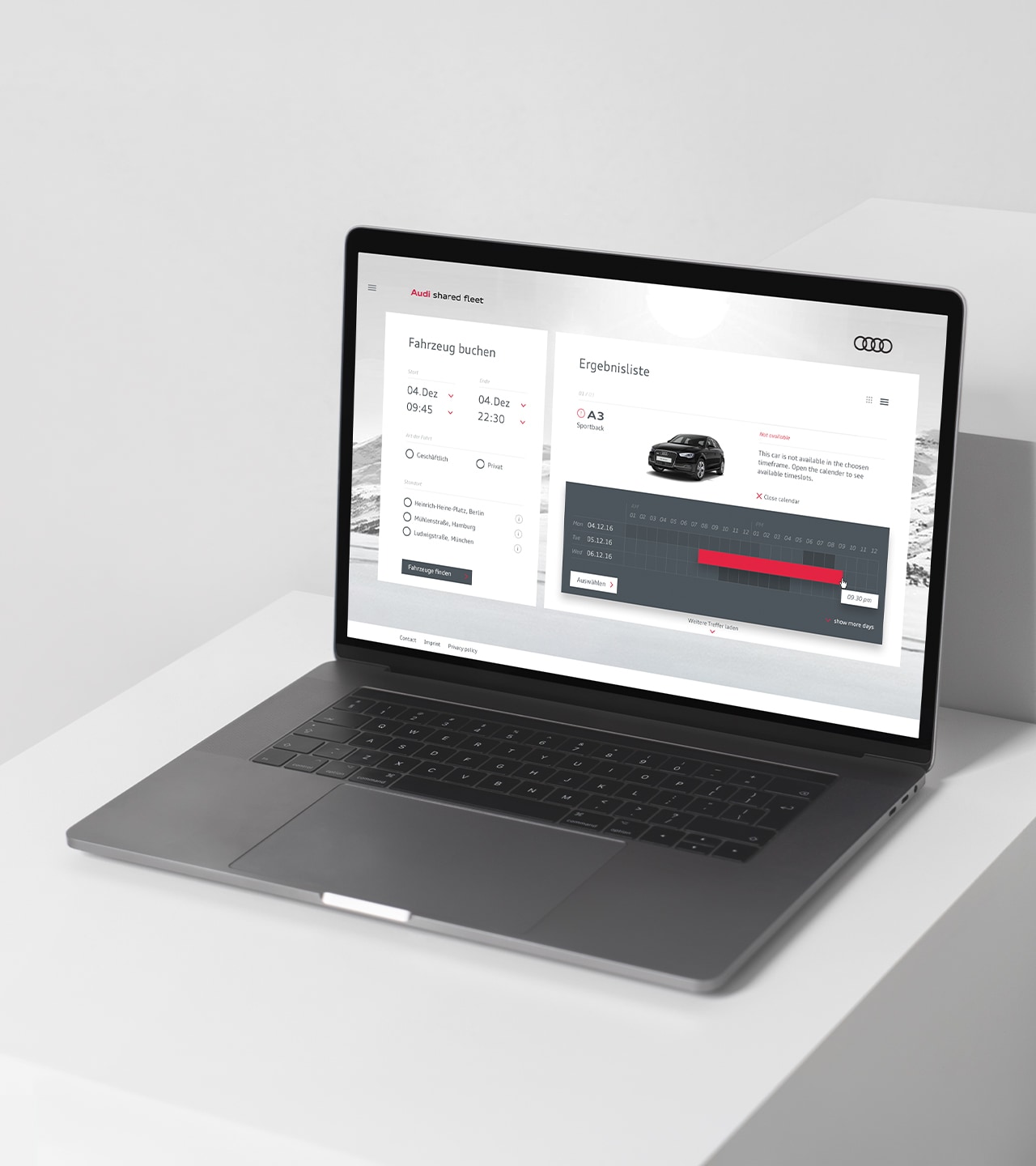
Drivers needed a booking experience with the directness the offer deserved. Business and private journeys separate from the first step, because each carries different billing logic, reporting requirements, policy implications, and fleet contracts that may or may not include a private option. Fleet managers needed a different relationship with the same system. Full visibility across fleet status, which vehicles are in private use, which are out for business, alongside employee data and invoicing, independent from the driver experience.
The system was built to arrive complete for corporate clients. Its API architecture was prepared to integrate cleanly into existing fleet infrastructure, so adoption became a technical fit rather than a project. The experience ran the full lifecycle, from booking through active use to handover.
The early tests in Berlin were beta. The rollout that followed built on the experience TFO shaped. Greenhouse developed, TFO led product design, experience architecture and technical specification through to handover. What was new ground back then is standard practice across corporate fleets now.
Highlights Downtime as an asset Fleet vehicles that sat unused outside business hours became an employee benefit with genuine recruiting and retention value. The structural insight was Audi's. The product gave it a form companies could deploy.
Two modes, one system Driver and fleet manager access are architecturally distinct within the same platform. Each operates with its own logic, permissions and reporting.
Built to integrate API readiness for existing systems was part of the specification from the beginning. Adoption did not require companies to leave their operational environment.
Pilot to rollout The experience TFO shaped carried the wider global rollout.
Contribution Product and Experience Direction Service design and product strategy for driver and fleet manager across the full journey.
Research and Validation User surveys, analytics and journey mapping to define and test the service.
UX and UI Design Native iOS app and browser based platform, both user modes, complete scope.
Information Architecture Booking logic, user permission model, handover and ride state flows.
Prototype Development Interactive prototypes for usability testing across key flows.
Technical Specification and Guidelines System documentation and integration readiness for development handover.
Development: Greenhouse
Read more
Two modes
The same product, two different relationships with it. The driver sees availability, books, moves. The fleet manager sees the whole operation. Same environment, different access.
One platform, two temperatures
A car on a Friday evening looks different than a car in a corporate usage report. The design system holds both readings.